
Barefoot Training Teleseminar
Last night (November 25th, 2012), we had a teleseminar about all things barefoot, from running to walking to hiking to, well anything else that came up.
It was an open format call where I just answered whatever questions came up. We discussed:
- Distance running form vs. sprinting form
- The proper way to walk when barefoot
- “Front side” vs. “Back side” mechanics
- Which muscles you should be using when you’re barefoot/minimalist
- Confusion about foot strike (and clarification about what’s correct)
- Barefoot running injuries and what’s the best kind of injury you can get (seriously)
- Why comparing sole thicknesses of minimalist shoes is meaningless
- What makes Xero Shoes different than other minimalist footwear, including other sandals
- and a LOT more…
The call ran about 42 minutes and, no doubt, we’ll be doing more of them in the future. It was a lot of fun.
You can listen to the teleseminar by clicking here: Barefoot Teleseminar
If there’s a question we didn’t get to, feel free to ask it in the comments section. I may answer it here, or I may wait and schedule another barefoot teleseminar and dive into it on the call.
Likewise, you can reach out to us directly through our support box, or phone line.
The content of this post does not constitute and is not intended to be a substitute for professional medical advice, diagnosis or treatment. Always seek the advice of a physician or other qualified health provider with any questions or concerns you may have about your health or a medical condition.
We support the Tarahumara

 One aspect of our business that we’re most proud of and makes us very happy is that we can give back to those who’ve inspired us.
In this case, we were inspired by the Tarahumara Indians of Mexico, also known as the Raramuri. If you haven’t read Christopher McDougall’s New York Times bestseller Born To Run yet, you must. It’s a great read, and tells quite a bit about the Tarahumara.
What it doesn’t discuss very much, though, is how difficult life can be in the Copper Canyon. Healthcare and medical care is hard to come by. Clean water is rare. Food is scarce. This part of Mexico has been experiencing a major drought. Child mortality is high, and educational opportunities are not easily available.
So, to give thanks and support the Tarahumara, we donate 5% of the purchase price of our DIY FeelTrue® Xero Shoes to the Tarahumara Children’s Hospital Fund.
TCHF provides medical care, education, food and clean water programs and, in many ways, provide aid in this difficult and in-need area.
Thank you for your purchases which allow us to thank and help the Tarahumara.
You can now make an additional donation of any size along with your order. Click here to donate and support the Tarahumara.
How to Walk Barefoot – Xero Shoes


How to Walk Barefoot
I expect (and kind of hope) that many people reading the title of this section will think, “Uh, I don’t need instruction about how to walk. I’ve been doing it all my life.”
I also expect (and definitely hope) that others will read the title and think, “Finally, the answer to my most burning question! I’ve been worried that I’m walking wrong.”
For those of you in the first group, let me ask you this: Do tribal women in Africa with water jugs balanced on their heads walk in the same way that Olympic race walkers do? And, do either of those people walk the way you do?
I’d bet that the answer you found for both of those questions is “No.”
That’s because walking isn’t just walking. There are ways of walking that are more or less effective, more or less efficient, more or less healthy and strong.
And if you accept that premise, that could put you in the second group.
Now, for those of you in the second group, I have what could seem like bad news. There is no one answer to “How do I walk.”
This article will not reveal the hidden secret of locomotion that only wisened Tibetan lamas from the Drepung monastery have taught to their senior disciples, or the geometrical relationships between your lower extremity joints that is optimal for effortless, pain-free walking, or the best footwear you can use for carrying a 200 pound pack on a 1,000 mile hike over broken glass.
It’ll actually do something better.
It’ll show you how to become your own best teacher and discover your own secrets for walking efficiently, enjoyably, and easily.
But first, the benefits of running barefoot
Before we can discuss walking, let’s review of the premises behind, and arguments supporting barefoot running, which will be important when we get back to talking about walking:
Landing on your heel, especially with a foot position in front of the knee and the knee almost straight, sends a shock through the joints — the ankle, the knee, the hip, and up the spine.
When you wear typical running shoes with padded, elevated heels, the elevation makes it more likely that you’ll land heel-first, and the padding makes it harder to get the feedback that you need to not put this extra force into your body.
And, research shows that the padding doesn’t actually reduce the impact forces.
This isn’t good.

Running barefoot reduces the likelihood that you’ll land on your heel… because, frankly, it hurts. Instead, what people naturally do is start landing on their forefoot or midfoot, with a bent knee and the ankle not in front of the knee. This reduces the force going through your joints, allowing you to use the muscles, ligaments, and tendons the way they’re meant to be used, as natural springs, shock absorbers, and joint protectors.
So, what does all this have to do with walking?
Well, the whole conversation about foot-strike rarely came up prior to the barefoot running boom. Now it’s practically dinner party conversation, where the barefoot gang looks down their noses in disgust at shoe-wearing heel-strikers.
And the increase in the volume of this conversation has led to another question, which probably nobody asked prior to the publication of the book Born To Run, the book that kicked off the barefoot boom. This is a question I’m emailed almost daily, namely,
“How should my foot land when I am walking?”
It sounds like a reasonable question.
If there is some optimal way for your foot to land when you run, there must be a “right” way for it to land when walking, right?
Well, among the barefoot running research community there’s debate about whether a forefoot strike is better/worse than a midfoot strike, or whether foot strike is idiosyncratic and different for different runners. There’s even an argument about whether heel striking is as evil as most barefoot runners take it to be.
How can this be? And how does this apply to walking?
Simple. Because heel strike is the effect of other aspects of your biomechanics, not the cause.
Think about it. The only way you can change how your foot lands on the ground is what you do with your ankle, your hip, and your knee.
To not land on your heel when you run, you probably need to bend your knee more than you usually do. But that alone could cause you to trip over your toes, so you also need to bend your hip a bit more. And then you may relax your ankle a little rather than pulling your toes towards your knee.
So “land on your forefoot” is really just a cue for “bend the hip and knee and relax the ankle.” For most people It’s a change in your whole posture of running. But if you told someone to change their hip, knee and ankle joint angles, they’d be too confused to even take a step.
Well, it’s similar with walking. Where your foot lands isn’t the issue. How you move your foot through space is.
When you walk, your foot can land in one of three ways: touching the front of the foot first, followed by the heel dropping to the ground; landing basically flat-footed, probably touching the midfoot first, or; touching/rolling over the heel… which is sort of still a flat-footed landing but with the heel contacting first.
Which one of these happens is a function of how fast/slow you’re walking, whether you’re walking up/down hill, whether you’re accelerating or slowing down, and what kind of surface you’re on.
Really, there’s no need to worry about foot-strike. It’ll take care of itself… if you pay attention to this next thing.
Here’s How to Walk Naturally
First, you’ll want to be barefoot, or as close to barefoot as possible. (In other words, if you don’t want to walk in bare feet, avoid a cushioned shoe and pick a pair of barefoot-inspired, or minimalist, shoes instead.)
Why? Because there’s value in being able to fully articulate your foot and in letting the nerves in your feet actually feel the ground.
If I then asked you to start walking, most people would basically swing their free leg out in front of them and, at the right moment, push off the toes of the back leg to pivot over the front foot, which has landed on the heel way out in front of you.
Try this instead: Lift your left foot about an inch off the ground and imagine the motion you might see in roller skating or ice skating. When you’re skating, you push yourself forward with the back leg, driving the heel backwards, which engages the glutes and the hamstrings.
In fact, If you can feel your glutes and hamstrings, tightening them will drive your heel back and move you forward. (“Drive the heel back” and “tighten your glutes” are two cues referring to the same thing.)
When you do this – driving the heel back and using your glutes and hamstrings – don’t worry about doing anything with your left leg (which is slightly off the ground). Don’t move it forward. Let it just hang there and use it to catch you from falling on your face.
As your weight shifts onto your left leg, don’t actively swing your right leg out in from of you. Just lift it an inch or so off the ground and repeat the motion I just described, driving your left heel backwards and using your right leg to catch you so you don’t face-plant.
If you simply place your foot down where it’ll stop you from falling (rather than swinging it out in front of you like you usually do), it’ll land closer to your center of mass, more flat-footed, with a slightly bent hip and knee, and with the now front leg in a biomechanically stronger position. You will have planted your foot.
If you repeat this — using your glutes and hips to move you forward, and placing your feet instead of swinging your legs forward — you’ll be supporting your lower back… and your knees, and your hips, and even your ankles.
Your foot-strike will take care of itself.
You’ll feel like you’re walking “on top of your feet” rather than behind them.
This motion may feel a bit robotic at first, but as you practice and relax, it’ll get smooth, comfortable, and efficient.
The Health Benefits of Walking Barefoot
Many podiatrists grasp the benefits of walking barefoot and recommend it as a cure for plantar fasciitis. Many chiropractors and orthopedic physicians recommend walking barefoot to cure lower back pain.
Being barefoot can help with plantar fasciitis because, when you walk barefoot, especially on uneven surfaces, you’ll use your feet in a way that “pre-loads” the plantar fascia, putting them in a strong position when you need them.
Being barefoot can help with lower back pain because it helps you walk naturally, the way human beings are built to walk. When you do that, as we saw above, you use your glutes and hamstrings as the prime movers. Using them makes them stronger, and stronger glutes and hamstrings support your lower back.
And using these big muscles is what can support you, whether you’re going for a stroll or carrying a 50 pound pack on a trail (which, by the way, will be easier because your engaged glutes and hamstrings support your lower back).


When you think about staying on top of your feet, and using your glutes and hamstrings, you’ll naturally discover the easy and efficient ways to walk in any situation. You’ll understand it from the inside out, from your own experience, not from some guidebook about how many inches behind your knee you should have your ankle when you’re walking up a 10 degree incline in 50 degree weather on a Thursday.
Combine this with feeling the world because you’re barefoot or in some truly minimalist footwear (be warned, most major shoe companies claim their product is “barefoot” when it’s about as close to barefoot as a pair of stilts), and I guarantee that your next walk or hike will be a revelation… and a lot of fun.
I’m still working on a video to demonstrate what I mean, but in the meantime, check out this video from Dr. Justin Lin, which makes the points I made above:
A Few Common Questions about Walking Barefoot
Can I walk barefoot on hard surfaces?
People often assume walking barefoot is really only possible on soft surfaces like grass or sand. This isn’t true.
If you learn to move the way we described above, which running or walking barefoot teaches you to do, you can handle hard surfaces just fine.
Note, though, that there is a time for shoes. Sometimes surfaces are too hot, sometimes there are sharp objects around that can pose a risk of injuries, sometimes you want to go into a restaurant. More on that in the next question…

Can minimalist shoes give me the same health benefits as walking barefoot?
I realize walking barefoot isn’t for everyone (and isn’t the best thing on all occasions, as I noted above). That’s why we created Xero Shoes, to give you an experience as close as possible to running or walking barefoot while still having shoes on your feet.
Xero Shoes are designed with a thin, flexible sole and a roomy toe box that let your feet move naturally. You can get the same kinds of health benefits (for instance, strengthening the muscles of your feet, as one study found) and other benefits, like greater feedback from your environment.
We make minimalist shoes, sandals, and even boots, that you can wear anywhere from the office to the trail.
Intrigued? Find your perfect pair here.
The content of this post does not constitute and is not intended to be a substitute for professional medical advice, diagnosis or treatment. Always seek the advice of a physician or other qualified health provider with any questions or concerns you may have about your health or a medical condition.
Why barefoot sandals and not minimalist shoes?
New to “barefoot shoes”? Trying to decide between the minimalist shoe options?
I know the feeling. Back in 2009, when I knew I wanted the benefits of being barefoot, but with a bit of protection (and something that would let me get into restaurants), I tried everything.
I LOVE our new minimalist shoes… they’re built off of our sandal base so they’re as close to barefoot as any shoe I’ve ever tried.
That said, if you want a “more barefoot” experience, you’ll want to try a sandal at some time. Here’s why. Continue reading Why barefoot sandals and not minimalist shoes?
Is there a best way to run?
The barefoot running boom has heated up a debate about the best way to run.
Barefoot? Shoes? Barefoot shoes?
Midfoot strike, heel strike, forefoot strike?
In today’s New York Times Online, Gina Kolata (whose writing and name I adore) goes after this question.
Really, you can stop reading after the first sentence of the 2nd paragraph… and since that’s the most important sentence, I’ll just quote it here:
Most of the scientific research is just inadequate to answer these questions
The reasons that the research is inadequate are two-fold:
- Not enough research to explore the various aspects of the question
- Poorly designed research
I can’t say much about #1 other than to hope that more research is done. But if more research is done poorly, then what’s the point.
So what makes some of the running research, especially the studies that examine barefoot running, so poor? A number of factors:
- Bad cohort (the people in the study). Many of the studies solicit “barefoot runners” who’ve never actually run with bare feet. They may have spent some time in Vibram Fivefingers or, worse, in Nike Free… but wearing those is not the same as being barefoot (as many readers of this blog can attest). Many of the studies have too few runners. Many of the studies have runners that are, say, between the ages of 18-22 and on the college cross-country team (they’re not typical runners). And if the number of runners in the test is small enough, it may be hard to extrapolate from their results.
- Missing factors. Many of the studies will look at one aspect of gait and ignore many others, and then try to conclude something about running mechanics. Rodger Kram’s recent study on cushioning, for example, doesn’t look at foot placement (overstriding or not), doesn’t consider weight (which can effect the value of cushioning), type of cushioning, etc. I’m not saying that it’s even possible to design a study that accounts for all these factors, but when you isolate things too much, it’s hard to draw a useful conclusion… though everyone around you will draw it and then fight to the death defending or attacking it.
- Arbitrary variables. Many studies are done with runners on treadmills running at a fixed pace. The obvious question: is running on a treadmill identical to running on a track? Not in my experience. Also, is, say, 5 minute/mile pace my usual pace? We know that if you increase your cadence without increasing your speed, you can reduce force on your body and decrease the amount of time you spend on the ground… so by controlling one variable, you could be affecting the results of the study.
Suffice it to say, I’m always glad when the media talk about running, and barefoot running in particular. But I find it unsatisfying when they merely regurgitate the “results” of a study without telling the reader whether the study is worth considering in the first place.
Then there’s the straw man problem, which is when you make up a person (complete with opinions) and then argue with that fictional person. There’s a lot of that going on. Many barefoot writers (including myself, Pete Larson, Bill Katovsky, Mark Cucuzzella) have noticed that individual differences may be more important than “one right way” to do things, and that it’s hard to get useful data by looking at genetic freaks (like Olympians). Yet the media loves to present these studies, and studies of studies, as if there’s no reasonable thinking on either side of the fence. Not true.
Again, as the article said up top: Most of the scientific research is just inadequate to answer these questions. Let’s hope that changes.
The content of this post does not constitute and is not intended to be a substitute for professional medical advice, diagnosis or treatment. Always seek the advice of a physician or other qualified health provider with any questions or concerns you may have about your health or a medical condition.
Barefoot Running – The Movie!
Our friends Michael Sandler and Jessica Lee have just released an incredibly ambitious project:
Barefoot Running – The Movie
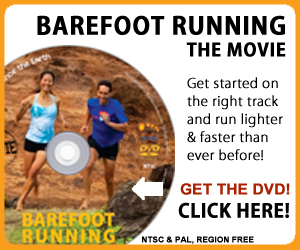
Shot in Hawaii, the footage is STUNNING (it’ll make you want to run, run barefoot, run barefoot in Hawaii, or just move to Hawaii). I’m telling you, some of the shots in this movie make it feel like you ARE running around Hawaii, which as the Fall descends on Colorado, is quite a pleasant feeling.
And it’s practically everything Michael and Jessie know, and have been teaching, about barefoot running for the last 3+ years. I say “practically” because the section of footwear is notoriously lacking in a mention of us 😉 (or of huaraches, in general).
I asked Michael about this. He said, “When we got to that section of the video, it was just me and the director and one camera… and we didn’t have any of our sample footwear — including Xero Shoes — on the island. And we had just a few hours to get that section done!”
Apology accepted 😉
He did, though, let me know that huaraches are featured in their upcoming book, Barefoot Walking (due out early 2013).
BTW, if you don’t know, Michael and Jessie were my introduction to running without shoes… and Michael’s comment that if I built a website for what was at the time a sandal-making hobby he would include us in his upcoming book… well, that was the beginning of Xero Shoes.
Congrats on an impressive and heartfelt project, M & J… and thanks for inspiring what has become the most satisfying business I can imagine.
“Barefoot Sandal” Start-up Hires Former Crocs Exec
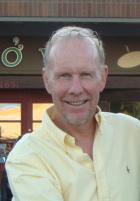 “Barefoot Sandal” Start-up Xero Shoes Brings On Former Crocs Exec and Avia Co-founder
Boulder, CO, October 2, 2012 – Dennis Driscoll, a 35-year footwear industry veteran who co-founded Avia Footwear and most recently worked as Global Design Director for Crocs, has joined Boulder-based barefoot running shoe start-up, Feel The World, Inc., the makers of Xero Shoes • Original Barefootware.
Driscoll’s roll at the bestselling “barefoot sandal” manufacturer is Chief Development Officer. Asked what attracted him to the product, he answers, “Xero Shoes are genuine, legitimate. We don’t have to create ways to differentiate our product, because it is actually different.”
Regarding the company, and its co-founders, Steven Sashen and wife Lena Phoenix, Driscoll adds, “They are a smart team who’ve already proven themselves and their business. I like that my experience with all aspects of the footwear business can have a big impact here.”
Sashen and Phoenix reciprocate the admiration. “It’s highly unusual for someone of Dennis’s skills and caliber to work for a company at our stage. We’re thrilled to have Dennis help take our product, and our company, to the levels we know they can attain.”
Dennis Driscoll started in the footwear business in 1978 with Osaga Athletic Footwear as the Director of Product Development. In 1981 he co-founded Avia Athletic Footwear as the VP of Product. Ten years later Dennis joined Wilson Sporting Goods as the Global Business Unit Director of Footwear. After a 7-year stint at Converse in senior product roles, Driscoll took a position at Doc Martens Footwear and moved to London as the Global Director of Product. In 2010, he went to work for Crocs as Global Design Director where he had a fourteen member design team in the US office and design centers in Padova, Italy and Tokyo, Japan
ABOUT:
Feel The World, Inc. of Boulder, CO, manufactures Xero Shoes®, a high-tech upgrade on the traditional huaraches running sandal of the Tarahumara Indians of Mexico. Durable, stylish and affordable — Xero Shoes supply the fun and benefits of being barefoot, but with a layer of protection. Feel The World, Inc. launched in December 2009. To date, over 25,000 customers, ages 1 to 91, in more than 73 countries wear Xero Shoes for walking, hiking, yoga and gym-going, Crossfit, kayaking, jogging, and even running hundred-mile ultra marathons.
Former Crocs Exec and Avia Co-founder Joins “Barefoot” Start-up Xero Shoes

Boulder, CO, October 2, 2012 – Dennis Driscoll, a 35-year footwear industry veteran who co-founded Avia Footwear and most recently worked as Global Design Director for Crocs, has joined Boulder-based barefoot running shoe start-up, Feel The World, Inc., the makers of Xero Shoes • Original Barefootware.
Driscoll’s roll at the bestselling “barefoot sandal” manufacturer is Chief Development Officer. Asked what attracted him to the product, he answers, “Xero Shoes are genuine, legitimate. We don’t have to create ways to differentiate our product, because it is actually different.”
Regarding the company, and its co-founders, Steven Sashen and wife Lena Phoenix, Driscoll adds, “They are a smart team who’ve already proven themselves and their business. I like that my experience with all aspects of the footwear business can have a big impact here.”
Sashen and Phoenix reciprocate the admiration. “It’s highly unusual for someone of Dennis’s skills and caliber to work for a company at our stage. We’re thrilled to have Dennis help take our product, and our company, to the levels we know they can attain.”
Dennis Driscoll started in the footwear business in 1978 with Osaga Athletic Footwear as the Director of Product Development. In 1981 he co-founded Avia Athletic Footwear as the VP of Product. Ten years later Dennis joined Wilson Sporting Goods as the Global Business Unit Director of Footwear. After a 7-year stint at Converse in senior product roles, Driscoll took a position at Doc Martens Footwear and moved to London as the Global Director of Product. In 2010, he went to work for Crocs as Global Design Director where he had a fourteen-member design team in the US office and design centers in Padova, Italy and Tokyo, Japan.
Visit www.XeroShoes.com to learn more about the minimalist sandal company and its barefoot-style products.
###
ABOUT: Feel The World, Inc. of Boulder, CO, manufactures Xero Shoes®, a high-tech upgrade on the traditional huaraches running sandal of the Tarahumara Indians of Mexico. Durable, stylish and affordable — Xero Shoes supply the fun and benefits of being barefoot, but with a layer of protection. Feel The World, Inc. launched in December 2009. To date, over 25,000 customers, ages 1 to 91, in more than 73 countries wear Xero Shoes for walking, hiking, yoga and gym-going, Crossfit, kayaking, jogging, and even running hundred-mile ultra marathons. #
Xero Shoes Barefoot Sandals in COLOR!
Houston, we have color!
I am extremely happy and proud to announce that you can now get Xero Shoes in 4 WAY COOL colors. And to celebrate, you can also save 20% if you order by October 2nd!
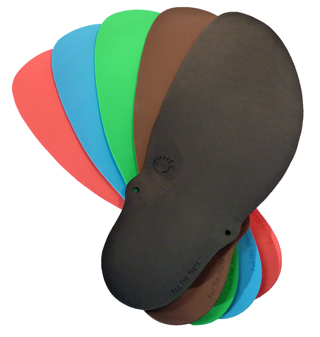
In addition to our Coal Black, you can now get Mocha Earth, Electric Mint, Boulder Sky, and Hot Salmon.
Combine those with our different lace colors…
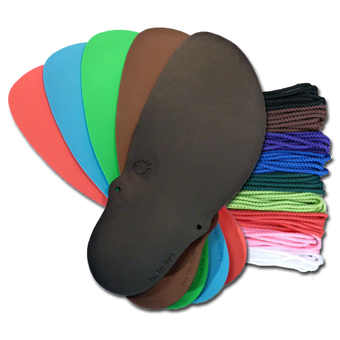
Well, here are a few combinations that you’ll see around our office:

Lena in her Mocha Earth with matching brown laces and a bunch of Brass Beads.

Our office ultra-runner (and customer service manager), Bill, in Electric Mint with Purple laces (he puts 80-100 miles a week on these!)

Steven, taking inspiration from an 8 year old customer who was the first one to wear non-matching laces, in Boulder Sky with White laces and a Hand Pendant (on the left) and Hot Salmon with Red laces (right).
These new colors come in both Connect 4mm and Contact 6mm styles. And you can get them as kits or custom-made.
Click here to order your Xero Shoes Colored Barefoot Sandals


 Fostering honest and responsive relationships between businesses and consumers.
 If you somehow manage to wear through the outsole on your Xero Shoes, we will replace them for a nominal shipping & handling fee.