Posted on 100 Comments

What’s the WORST surface for running barefoot?

When I tell people that I run barefoot (or when they see me out running without any shoes), the first response I get is

“Oh, so you run on the grass?”

Or when I suggest to people that they might want to try running barefoot, the first thing they say is,

“With my feet/knees/ankles/eyelashes, I’d need to run on the grass.”

I mean, it makes sense, right?

Grass is soft. Feet are soft. Therefore, feet should be on grass.

Barefoot = Grass is the common wisdom.

But wisdom is rarely common, and what’s common is rarely wise.

Here’s what I can tell you, though. And it’s not just me, every accomplished barefoot runner I know will say the same thing. And all the other good coaches I know agree.

In fact, what I’m about to say is SO true, that if you meet a coach who tells you otherwise, RUN AWAY (barefoot or not, I don’t care) from this person as quickly as you can, because they don’t know what they’re talking about.

Here it is:

THE WORST SURFACE for learning to run barefoot is GRASS.

THE WORST.

ABSOLUTELY.

Why?

Three big reasons:

  1. BIG: Who knows what’s hiding in the grass. If you can’t see it, you might step on it.
  2. BIGGER: One of the principles of barefoot running is that you don’t use cushioning in your shoes… well, when you run on grass, you’ve basically taken the cushioning out of your shoes and put it into the ground.
  3. BIGGEST: Running on grass, or any soft surface does not give you the feedback you need about your barefoot form to help you change and improve your form.

The best surface for barefoot running is NOT grass or sand or anything soft, but the smoothest and hardest surface you can find.

For me, here in Boulder, Colorado, we have miles and miles of bike path.

In New York City, the sidewalks are perfect!

So, what makes a hard, smooth surface the best? It’s the biggest reason, from above:

FEEDBACK.

Grass and sand and soft surfaces are too forgiving of bad form.

Hard smooth surfaces tell you, with every step, whether you’re using the right form.

If it hurts, you’re not.

If you end up with blisters, you didn’t.

Pay close attention and each step is giving you information about how to run lighter, easier, faster, longer.

I’ll never forget going out on the University of Colorado sidewalks with the Boulder Barefoot Running Club. I had a blister on the ball of my left foot (more about that in another lesson). But I decided to see if I could run in such a way that I didn’t hurt .

At first, each step sent a shooting pain up my leg. Then I made some adjustments and I just felt the friction on the ball of my foot.

By the end of the first mile, I had made some other adjustments — using each step as an experiment — and the next thing I knew I was picking up the pace while putting out less energy than ever. I was running faster and easier than I’d ever run without shoes… and it was painless.

This would have never happened on grass.

I needed the feedback of the hard surface.

If you want to see a barefoot runner get a wistful look in his or her eye, mention a newly painted white line on the side of a road. Smooth, solid, cool… it’s the best! 😉

Oh, and it’s probably no surprise that the advantage of Xero Shoes is that when you wear those on the road, they still give you that feedback you need… but with protection from the surface.

Posted on 15 Comments

How do Xero Shoes compare to Barefoot Ted’s Luna Sandals?

You may have read about “Barefoot Ted” in Chris McDougall’s book Born To Run, the book that really kickstarted the whole barefoot running boom back in 2009-2010.

Or you may just be searching for running sandals and find Ted’s company, Luna Sandals, as well as Xero Shoes and you want to know the differences.

Well, hopefully this will help.

1) Xero Shoes has more style and design options to fit your preference than any other company

Luna sandals are all “huarache” style, with a strap that comes in between your toes, and then wraps around your foot and ankle.

Xero Shoes give you that option, plus 2 others.

The Xero Shoes DIY FeelTrue sandal kit and Classic huarache sandal making kit allow you to make a sandal in that same style.

Our ready-to-wear huarache sandals — Cloud and Genesis — use a patented lacing system that still use a “thong”, but let you adjust the tension perfectly in just a couple seconds. And once you’ve done that once, you can get in/out of your sandals by just sliding the heel strap on/off your foot. This lacing system keeps the sandal snug and comfy on your foot, even if you’re running trails.

BTW, even though there’s a super soft lace between your toes, unlike a flip flop, there’s not pressure on the webbing between your toes because the lacing system holds ALL the way around your foot/ankle, so you don’t need to jam your toes into the thong like you do with a flip flop.

Also, if you don’t want anything between your toes, Xero Shoes offers 2 sport sandals styles — our Z-Trek and Z-Trail — which have a webbing pattern, similar to Chaco or Teva or Keen.

Finally, our Jessie sandal gives you a soft toe loop with an ankle/instep strap. It’s incredibly comfy and perfect for a stroll, a camp shoe, a night on the town, or anything in between.

In short, Xero offers you more style and design choices for your sandals, whether you use them as running sandals, hiking sandals, or just everyday wear.

2) Xero Shoes is committed to natural movement

One quarter of the bones and joints in your body are in your feet and ankles. You have more nerve endings in your soles than anywhere but your fingertips and lips.

What this means is somewhat obvious:

Your feet are made to bend and move and flex and Feel The World™.

Xero Shoes let them do that.

Our DIY sandals use a 4mm sole — either our exclusive FeelTrue® rubber or Vibram Cherry — which is the ultimate in flexibility and barefoot feel.

Aside from really being able to connect with the ground with our soles, you can roll up Xero Shoes and keep them in your pack or pocket — go out barefoot, and come back with some protection on your feet.

For a bit more protection, we have other options, too.

Our FeelTrue® DIY kit also comes in a 6mm thickness.

Our Cloud sandal is 5.5mm thick total, but has 3mm of BareFoam™ in the forefoot for a bit of extra comfort.

The Z-Trek is just 5.5mm of FeelTrue® rubber for great barefoot feeling. The Z-Trail has a 3-layer FeelLite sole with FeelTrue® rubber at the abrasion points, a layer of TrailFoam™ to take out the bumps, and a layer of BareFoam™ under your foot for comfort.

The Genesis is 5mm of FeelTrue® rubber, and Jessie is just 6mm thick.

When you look at the Luna sandals you’ll see that most models are much thicker, reducing the flexibility and natural movement as well as the ground feel.

3) Guaranteed Performance

All of our shoes and sandals are backed with an unmatched 5,000 mile sole warranty.

4) Vegan Friendly

For our huarache style sandals, we use soft, durable polyester laces that don’t stretch or contract when they get wet and dry out, unlike leather or hemp.

Our laces are round, meaning that there are no edges to rub on your skin.

Polyester is a very strong material — I’m still using the original laces in my 12-month old huaraches that I wear every day — and after getting wet, the laces dry really fast. And with round laces, you don’t have to worry about “which side is up” or getting them twisted when you use the different tying styles (some of the clever tying variations people have developed require round laces.

Plus, you can get our laces in a bunch of fun colors. And if you ever want to replace your laces or get other colors, they’re inexpensive.

For our sport sandals, we use a super-soft polyester webbing.

We don’t use leather footbeds which can hold dirt and bacteria. Our sandals are easy to clean.

5) Xero Shoes are affordable

Xero Shoes sandals range in price from just $17.95 (kids DIY kit) to $79.99 (Z-Trail).

6) Xero Shoes have SHOES

Finally, of course, Xero Shoes has taken our sandals and built them into complete line of casual and performance shoes, based on the same natural movement philosophy and even carrying over some of the sandal’s design elements.

In closing…

I hope that helps, whether you’re looking for a barefoot running sandal, a camp shoe, a hiking sandal, a casual sandal, the perfect travel sandals, we’ve got you covered.

Go to https://ctdev.guruslabs.com//shop/ to see more, to get your Xero Shoes, and to Live Life Feet First!

Posted on Leave a comment

Daniel Lieberman studies the Tarahumara running

Daniel Lieberman studies the TarahumaraDr. Daniel Lieberman is one of the fathers of the barefoot running movement. His study showing how barefoot runners strike the ground with less force than shod runners, combined with Christopher McDougall’s book, Born to Run, catalyzed the growth of barefoot and minimalist running.

Well, it’s as if Dr. Lieberman had a child with BTR, since his new study looks at how the Tarahumara run. And, more, it compares Tarahumara runners in huaraches to younger Tarahumara who run in padded running shoes.

You can read the study for free here.

Before I talk about what the study reveals (and what it doesn’t), let me address a myth about barefoot running… Continue reading Daniel Lieberman studies the Tarahumara running

Posted on 2 Comments

Can you run long distance in sandals? You bet!

There’s nothing I find funnier than when I’m running in my Xero Shoes sandals and someone asks, “Can you run in those?”

Uh… you’re WATCHING me run in them!

Well, when I tell non-runners that some people run 100k ultramarathons in huaraches, they’re incredulous.

Now I don’t need to explain anything, I can just show this video of the La Ruta Run, a 50k and 100k race that took place in Costa Rica. Arguably, La Ruta is the hardest trail ultramarathon in the world.

Check it out… but be careful. This video will make you want to run La Ruta!

Oh, and look at the 4:18 -ish mark for Jonathan Sinclair and Melissa Gosse running La Ruta in their Xero Shoes! Hear them talk about running La Ruta here.

And check out the women running in their cheap plastic sandals!

Posted on Leave a comment

Running with the Tarahumara in Costa Rica

Jon-and-Mel-at-La-RutaWant to run with the Tarahumara (the Mexican tribe featured in Chris McDougall’s bestseller, Born to Run)?

Well, if you can’t make it to the Copper Canyon, or anywhere else for that matter, here’s the next best thing.

Ultra runners Jonathan Sinclair and Melissa Gosse went to Costa Rica for La Ruta 100k, arguably the hardest trail ultramarathon in the world.

About a dozen Tarahumara runners were there and Jon and Mel got to spend the better part of a week hanging out and running with them — as well as swapping huaraches and Xero Shoes, eating, drinking, and much more.

They’ll be sharing pictures and stories as well as giving great tips about barefoot running, minimalist running, ultramarathon training, and anything you can think to ask about.

You can also click on this link to watch live video chat we had with them a few months ago.

jonandmelissa-at-la-ruta-ultramarathon melissa-tarahumara

Posted on 31 Comments

Xero Shoes Barefoot Sandals in COLOR!

Houston, we have color!

I am extremely happy and proud to announce that you can now get Xero Shoes in 4 WAY COOL colors. And to celebrate, you can also save 20% if you order by October 2nd!

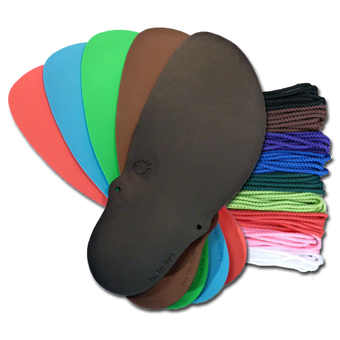
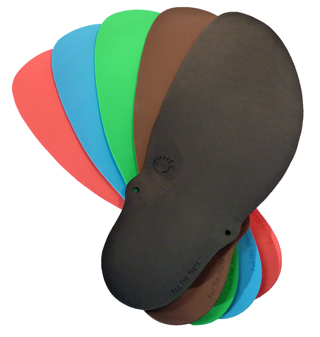
In addition to our Coal Black, you can now get Mocha Earth, Electric Mint, Boulder Sky, and Hot Salmon.

Combine those with our different lace colors…

Well, here are a few combinations that you’ll see around our office:

huarache style running sandals

Lena in her Mocha Earth with matching brown laces and a bunch of Brass Beads.

Our office ultra-runner (and customer service manager), Bill, in Electric Mint with Purple laces (he puts 80-100 miles a week on these!)

Steven, taking inspiration from an 8 year old customer who was the first one to wear non-matching laces, in Boulder Sky with White laces and a Hand Pendant (on the left) and Hot Salmon with Red laces (right).

These new colors come in both Connect 4mm and Contact 6mm styles. And you can get them as kits or custom-made.

Click here to order your Xero Shoes Colored Barefoot Sandals

Posted on 5 Comments

Barefoot in Asia – Regev’s Review

I just realized that I have a strange history with barefoot running, barefoot walking, and minimalist shoes.

First, like most of us, I spent a lot of time barefoot as a kid in the Summer. I went to a camp in the Pocono Mountains (Camp Shohola just in case any readers also went there) and whenever I had the chance, I was barefoot (made easier by the fact that I spent half of my days doing water sports). I was a competitive diver, too, so that kept me out of shoes.

In junior high school and high school, I was a gymnast, so that was even more barefoot time every day.

When I was 18, I went to New York City to be a street performer. I had already been doing this in Washington, DC, doing a magic act in Georgetown, and on K Street, near the White House. When I got to NYC, though, I found it much harder to get a crowd and, even worse, within a few weeks, the other street magicians had stolen all my bits! I asked one of the veteran street acts what I should do and  he said, “Simple, write an act that nobody would dare steal.”

I pondered this for a while, until I landed on the answer. I created an act that had a bunch of crazy gymnastics in it (I did a running front flip over someone’s head, stealing their hat and placing it on my head while in mid-flip), and a finale where I… wait for it… walked on broken glass in my bare feet.

Now let me back up. For the gymnastics part of the act, I wore minimalist shoes. They were some old Adidas (I can’t remember the name), with zero-drop, very little toe spring, not much padding. Just enough between me and the ground so I didn’t kill my feet. This was in 1980-81, BTW.

I loved these shoes. I bought every pair I could find. When I could no longer find them, I asked the local running shoe store what happened and he answered, “Adidas stopped selling them; they were lasting too long.”

I don’t know if his info was accurate but, if it was, it wouldn’t be the first time a company pulled a product that didn’t wear out or go obsolete fast enough.

Luckily, I found a company that sold shoes to prisons (you can find ANYTHING in NYC), and they had the last few pairs of these shoes… I bought them all. And they lasted through some serious abuse.

Okay, back to walking barefoot on glass, though. Let’s just say that it’s part physics, part showmanship, and part some-hard-to-describe-thing that, if I could convince you to jump onto a 3″ high pile of shattered beer bottles, you would instantly get a knowing look in your eye and say, “Ahhh… I get it now.”

In 5 years and thousands of shows, I only got one small cut. But by the end of the day, my feet were FILTHY from being barefoot on the street.

CUT TO: Going to Asia in 1989.

This is where I got hooked on being barefoot. Aside from the fact that you never wear shoes into almost any building (I was in China, Nepal, India and Thailand), there were plenty of opportunities to be barefoot outside as well. There were also plenty of times where you wanted something on your feet, but not much because it was really hot when I was there, and anything more than a sandal was way too much.

When I came back from Asia, I stuck with the habit of removing my shoes whenever I went into someone’s home (we’ve saved a fortune on carpet cleaning by not dragging dirt in from the outside).

Okay, so why this long story?

Simple, I was reminded of it all when Regev Elya did his review of Xero Shoes, which he took on a 7-month trip through Southeast Asia (I’m SO jealous).

Of course, I think that Xero Shoes are the best minimalist shoes for a trip like that… but check out what Regev says.

Posted on 2 Comments

4 Reasons NOT to Run Barefoot

[This post is guest-authored by our friend Rob Raux from www.shodless.com]

Being barefoot and running barefoot is a blissful and consciousness-expanding endeavor. The feedback supplied from the ground is powerful enough to force even experienced runners to try it for only a mile or so, if they make it that far. Barefoot running, however wonderful, should not be subscribed to dogmatically.

There are myriad resources available expounding on the benefits of being barefoot. Most of their reasons, methods, and warnings have merit. Unfortunately many of them sway to heavily towards the one-size-fits-all solution.

Experiencing life unshod isn’t always the best option. Putting on a pair of huaraches or other minimalist shoes can serve a number of beneficial purposes:

  1. Technical Trail Running.
    Many people worry that the rocks, twigs, and roots on a trail make barefoot trail running impossible. Not true. First, you use your eyes and avoid what worries you. Second, your feet aren’t rigid and can grab and grip and mold around many “obstacles.”That said, while there’s nothing better than feeling the grass beneath your feet, having your heel land on an embedded rock leaves something to be desired. To be more specific, it could leave behind a bruise that will take at least a week to heal.That doesn’t include the chance of damaging the fatty tissue which protects your heel bone from impacting the ground. If any of this sounds painful, trust me, it’s worse than you’re picturing.A trail has hazards which you may not wish to risk if you’re still an inexperienced barefooter. When a single false step means a week of no running, it’s just not worth it to be ideological about keeping yourself unshod.
  2. Additional mileage
    Your body may be able to take additional mileage, but the bottoms of your feet may not be ready to support it yet barefoot. Now, if you’re looking to become a better barefoot runner, this is good news — when your skin tells you to stop… STOP! Over time it’ll adapt (not callous) and you’ll be able to put in more miles.Until then, there’s nothing wrong with protecting your precious footsies, but only if you know your form is correct. If you are transitioning from shoes to barefoot and have yet to perfect the change from heel strike to mid foot strike or a forefoot strike, don’t ask for trouble by adding more miles in a minimalist shoe. You’ll find yourself injured promptly and thoroughly.If you are comfortable in your stride, you will find that your feet hit a natural point where further barefoot running may only lead to blisters (that usually means your form has broken down and you’re pulling/pushing the ground, instead of placing/lifting). In these cases, adding a protective covering will give you the opportunity to add those additional miles you crave.
  3. Racing
    A foot covering increases your margin for error while running. Proponents of barefoot running tout the pain feedback loop as a beneficial aspect. Any foot covering blocks the pain receptors, which allow you to cause more damage to your body.In a race, this can be a necessary evil. A reduced pain feedback loop allows you to run a longer duration of more intensity. The covering may also absorb some of the mistakes you may have made barefoot (stepping on that rock in your mental fatigue).There’s obviously a very fine line to be ridden here, and one that you can certainly go too far with. Go with the least amount of covering possible and you should be able to dampen and absorb just the minimal amount of error to improve your results.I’d love to say, “If you’re not comfortable running that distance, don’t race that distance.” But I know how some of us… I mean, YOU… can be 😉
  4. The bitter cold
    Mother nature yields to no man. Don’t even think about getting the best of father winter.If you live in a climate that has a true winter, you know what frostbite feels like. Now try running barefoot.Amazingly, there are folks who do it, and enjoy it. And check out Steven shoveling snow in his huaraches. Frankly, I’ve tried it and even I think that’s crazy. Most people are going to need something to keep their feet protected from the elements (wind, snow, slush, etc.). Each person has a different tolerance, which will adapt as they get more comfortable with the colder weather.When dealing with the elements it’s best to be safer than pull up limp 3 miles from your house and walk the rest of the way home.

The content of this post does not constitute and is not intended to be a substitute for professional medical advice, diagnosis or treatment. Always seek the advice of a physician or other qualified health provider with any questions or concerns you may have about your health or a medical condition.

Posted on 22 Comments

Barefoot in the Cold

Can you run barefoot in the cold?

Here in the Northern Hemisphere, Winter is upon us. And people email me every day asking what to do if they want to be barefoot or minimalist in the cold weather. While I’ve written about running bare foot in the cold before, this is a whole new thing 😉

First let me say: DO NOT TRY THIS AT HOME. In other words, don’t go out and try to imitate me.

I’ve been barefoot running for over 2 and a half years, and haven’t worn a pair of real shoes for more than a total of 3 days in that time.

Last winter, I thought, “I’ll keep my Xero Shoes on until it seems too cold.” And the next thing I knew, it was Spring!

So, clearly I’ve acclimated. And that’s not too surprising. Humans (and our hominid cousins) lived in cold climates without shoes for a LOOOONG time. So, we’re kinda wired for it, if we give ourself time to adapt.

Here’s the video I just shot, after we got 18″+ of snow in Boulder. It’s about 15 degrees out.

What I did is this:

  • Outside for about 10 minutes
  • Inside to dry off my feet and warm them for 5
  • Outside for another 10
  • Inside to dry and warm for about 3
  • Outside for 30+ minutes… by this time my body temp had gone way up. I was sweating quite a bit. And my feet felt totally warm. Not numb. Warm. When I got inside after finishing the shoveling, they didn’t have to thaw or warm up or anything.

Lena wants me point out that you should check the Wiki about frostbite so you don’t do something stupid and get hurt 😉

The content of this post does not constitute and is not intended to be a substitute for professional medical advice, diagnosis or treatment. Always seek the advice of a physician or other qualified health provider with any questions or concerns you may have about your health or a medical condition.

Posted on 4 Comments

Xero Shoes Win “Best Huaraches 2011”

Xero Shoes wins Best Huaraches Running Sandal 2011

Christian Peterson, better known as The Maple Grove Barefoot Guy, just announced his first ever Grovie awards for excellence in minimalist footwear.

And we are thrilled to announce that Xero Shoes (formerly Invisible Shoes) won the Best Huarache category.

Here’s what Christian had to say:

2011 was really the year of the huarache.  We saw tons of new sandal companies crop up, all with great new innovative designs.  The big two companies (Invisible Shoes and Luna) also put out some great updates to their original models.  But Xero Shoes took that innovation to the next level.  They went out and got a former Nike shoe designer to make the FeelTrue sole of their Connect and Contact huaraches.  The result is a powerhouse of a sandal that has no real apparent weaknesses.

Christian recently reviewed the Connect and Contact version of our FeelTrue DIY Sandal Kit, so we’re especially honored to have 2 mentions in such a short period of time.

That said, while we’re happy to have won Best Huaraches running sandals, we have LOTS of plans for even more improvements and additional products for 2012. I hope that in next year’s Grovie Awards we win at least two categories, maybe even three! 😉

2011 has been a big year for us: Releasing the only outsoles made specifically for barefoot running (some like to say “bear foot running”) sandals  that were designed with the help of former lead designers from Nike and Reebok, our 2nd Anniversary, and a HUGE upsurge in business.

Between you and me, every time I see Chris McDougall, I practically kiss his feet. If it weren’t for him and the success of “Born To Run,” this whole barefoot running trend may never have taken off.

So, thank you again to MGBG, and to everyone else who has helped us and supported us in 2011.

I can’t wait to hear the comments when we launch all our new barefoot running sandal products in the next year.