Posted on 15 Comments

How do Xero Shoes compare to Barefoot Ted’s Luna Sandals?

You may have read about “Barefoot Ted” in Chris McDougall’s book Born To Run, the book that really kickstarted the whole barefoot running boom back in 2009-2010.

Or you may just be searching for running sandals and find Ted’s company, Luna Sandals, as well as Xero Shoes and you want to know the differences.

Well, hopefully this will help.

1) Xero Shoes has more style and design options to fit your preference than any other company

Luna sandals are all “huarache” style, with a strap that comes in between your toes, and then wraps around your foot and ankle.

Xero Shoes give you that option, plus 2 others.

The Xero Shoes DIY FeelTrue sandal kit and Classic huarache sandal making kit allow you to make a sandal in that same style.

Our ready-to-wear huarache sandals — Cloud and Genesis — use a patented lacing system that still use a “thong”, but let you adjust the tension perfectly in just a couple seconds. And once you’ve done that once, you can get in/out of your sandals by just sliding the heel strap on/off your foot. This lacing system keeps the sandal snug and comfy on your foot, even if you’re running trails.

BTW, even though there’s a super soft lace between your toes, unlike a flip flop, there’s not pressure on the webbing between your toes because the lacing system holds ALL the way around your foot/ankle, so you don’t need to jam your toes into the thong like you do with a flip flop.

Also, if you don’t want anything between your toes, Xero Shoes offers 2 sport sandals styles — our Z-Trek and Z-Trail — which have a webbing pattern, similar to Chaco or Teva or Keen.

Finally, our Jessie sandal gives you a soft toe loop with an ankle/instep strap. It’s incredibly comfy and perfect for a stroll, a camp shoe, a night on the town, or anything in between.

In short, Xero offers you more style and design choices for your sandals, whether you use them as running sandals, hiking sandals, or just everyday wear.

2) Xero Shoes is committed to natural movement

One quarter of the bones and joints in your body are in your feet and ankles. You have more nerve endings in your soles than anywhere but your fingertips and lips.

What this means is somewhat obvious:

Your feet are made to bend and move and flex and Feel The World™.

Xero Shoes let them do that.

Our DIY sandals use a 4mm sole — either our exclusive FeelTrue® rubber or Vibram Cherry — which is the ultimate in flexibility and barefoot feel.

Aside from really being able to connect with the ground with our soles, you can roll up Xero Shoes and keep them in your pack or pocket — go out barefoot, and come back with some protection on your feet.

For a bit more protection, we have other options, too.

Our FeelTrue® DIY kit also comes in a 6mm thickness.

Our Cloud sandal is 5.5mm thick total, but has 3mm of BareFoam™ in the forefoot for a bit of extra comfort.

The Z-Trek is just 5.5mm of FeelTrue® rubber for great barefoot feeling. The Z-Trail has a 3-layer FeelLite sole with FeelTrue® rubber at the abrasion points, a layer of TrailFoam™ to take out the bumps, and a layer of BareFoam™ under your foot for comfort.

The Genesis is 5mm of FeelTrue® rubber, and Jessie is just 6mm thick.

When you look at the Luna sandals you’ll see that most models are much thicker, reducing the flexibility and natural movement as well as the ground feel.

3) Guaranteed Performance

All of our shoes and sandals are backed with an unmatched 5,000 mile sole warranty.

4) Vegan Friendly

For our huarache style sandals, we use soft, durable polyester laces that don’t stretch or contract when they get wet and dry out, unlike leather or hemp.

Our laces are round, meaning that there are no edges to rub on your skin.

Polyester is a very strong material — I’m still using the original laces in my 12-month old huaraches that I wear every day — and after getting wet, the laces dry really fast. And with round laces, you don’t have to worry about “which side is up” or getting them twisted when you use the different tying styles (some of the clever tying variations people have developed require round laces.

Plus, you can get our laces in a bunch of fun colors. And if you ever want to replace your laces or get other colors, they’re inexpensive.

For our sport sandals, we use a super-soft polyester webbing.

We don’t use leather footbeds which can hold dirt and bacteria. Our sandals are easy to clean.

5) Xero Shoes are affordable

Xero Shoes sandals range in price from just $17.95 (kids DIY kit) to $79.99 (Z-Trail).

6) Xero Shoes have SHOES

Finally, of course, Xero Shoes has taken our sandals and built them into complete line of casual and performance shoes, based on the same natural movement philosophy and even carrying over some of the sandal’s design elements.

In closing…

I hope that helps, whether you’re looking for a barefoot running sandal, a camp shoe, a hiking sandal, a casual sandal, the perfect travel sandals, we’ve got you covered.

Go to https://ctdev.guruslabs.com//shop/ to see more, to get your Xero Shoes, and to Live Life Feet First!

Posted on

Xero Shoes heads Down Under

Outdoor industry analysts, SportsOneSource, reported our good news:

Xero Shoes Enters Australian Market
SportsOneSource Media     Posted: 1/15/2014

Xero Shoes announced that Stepping Out Footwear of Sidney will represent Xero Shoes in Australia and New Zealand.

After the Colorado maker of barefoot-­‐inspired footwear appeared on Shark Tank, and since the release of their ready-­to-­wear Sensori line of recreational performance sandals, Xero Shoes’ expansion has accelerated dramatically, with this being the first aggressive move into international retail.

Stepping Out Footwear’s Director, Hamish Lorimer, has 20 years of experience introducing international brands to the Australian market.

“When I saw the new Xero line of sandals at the Atlanta Shoe Market, I realized immediately that this was a perfect product for Australia. The simplicity, durability, and elegance all fit with the active lifestyle we lead down here. And with 8 months of sandal-­‐wearing weather, it really is, well… a PERFECT fit,” said Lorimer.

Xero Shoes CEO, Steven Sashen, said, “We know that Australia and New Zealand have a big flip flop culture. And the comfort, performance, and style that Xero Shoes provide make our products a total ‘flip-­flop killer.’”

Feel The World, Inc. of Broomfield, CO, manufactures Xero Shoes, a high-­‐tech upgrade on the traditional huaraches running sandal of the Tarahumara Indians of Mexico.

Needless to say, we are EXTREMELY excited about having more Aussies enjoying the fun and benefits of Barefootware®.

Posted on 2 Comments

“Barefoot Sandal” Start-up Hires Former Crocs Exec

Dennis Driscoll joins Xero Shoes“Barefoot Sandal” Start-up Xero Shoes Brings On Former Crocs Exec and Avia Co-founder

Boulder, CO, October 2, 2012 – Dennis Driscoll, a 35-year footwear industry veteran who co-founded Avia Footwear and most recently worked as Global Design Director for Crocs, has joined Boulder-based barefoot running shoe start-up, Feel The World, Inc., the makers of Xero Shoes • Original Barefootware.

Driscoll’s roll at the bestselling “barefoot sandal” manufacturer is Chief Development Officer. Asked what attracted him to the product, he answers, “Xero Shoes are genuine, legitimate. We don’t have to create ways to differentiate our product, because it is actually different.”

Regarding the company, and its co-founders, Steven Sashen and wife Lena Phoenix, Driscoll adds, “They are a smart team who’ve already proven themselves and their business. I like that my experience with all aspects of the footwear business can have a big impact here.”

Sashen and Phoenix reciprocate the admiration. “It’s highly unusual for someone of Dennis’s skills and caliber to work for a company at our stage. We’re thrilled to have Dennis help take our product, and our company, to the levels we know they can attain.”

Dennis Driscoll started in the footwear business in 1978 with Osaga Athletic Footwear as the Director of Product Development. In 1981 he co-founded Avia Athletic Footwear as the VP of Product. Ten years later Dennis joined Wilson Sporting Goods as the Global Business Unit Director of Footwear. After a 7-year stint at Converse in senior product roles, Driscoll took a position at Doc Martens Footwear and moved to London as the Global Director of Product. In 2010, he went to work for Crocs as Global Design Director where he had a fourteen member design team in the US office and design centers in Padova, Italy and Tokyo, Japan

ABOUT:

Feel The World, Inc. of Boulder, CO, manufactures Xero Shoes®,  a high-tech upgrade on the traditional huaraches running sandal of the Tarahumara Indians of Mexico. Durable, stylish and affordable — Xero Shoes supply the fun and benefits of being barefoot, but with a layer of protection.  Feel The World, Inc. launched in December 2009. To date, over 25,000 customers, ages 1 to 91, in more than 73 countries wear Xero Shoes for walking, hiking, yoga and gym-going, Crossfit, kayaking, jogging, and even running hundred-mile ultra marathons.

Posted on 31 Comments

Xero Shoes Barefoot Sandals in COLOR!

Houston, we have color!

I am extremely happy and proud to announce that you can now get Xero Shoes in 4 WAY COOL colors. And to celebrate, you can also save 20% if you order by October 2nd!

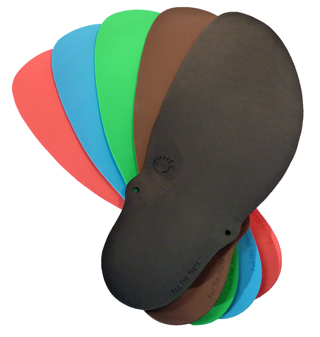
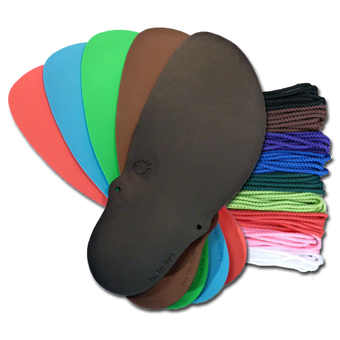
In addition to our Coal Black, you can now get Mocha Earth, Electric Mint, Boulder Sky, and Hot Salmon.

Combine those with our different lace colors…

Well, here are a few combinations that you’ll see around our office:

huarache style running sandals

Lena in her Mocha Earth with matching brown laces and a bunch of Brass Beads.

Our office ultra-runner (and customer service manager), Bill, in Electric Mint with Purple laces (he puts 80-100 miles a week on these!)

Steven, taking inspiration from an 8 year old customer who was the first one to wear non-matching laces, in Boulder Sky with White laces and a Hand Pendant (on the left) and Hot Salmon with Red laces (right).

These new colors come in both Connect 4mm and Contact 6mm styles. And you can get them as kits or custom-made.

Click here to order your Xero Shoes Colored Barefoot Sandals

Posted on 5 Comments

How to think like a shoe company

You know the saying “when all you have is a hammer, everything looks like a nail”?

Well, it’s true for shoe companies, too. When all you have is padding and motion-control, everything looks like it pronates and lands too hard!

Check out this video about the “secret” Adidas development center. Especially watch at the 2:10 mark where the “best people in the world” analyze Ben’s sprinting gait and conclude:

a) That he pronates and heel-strikes (NOTE: He over pronates BECAUSE he heel-strikes since, when you land on your heel, the ankle muscles can’t can hold the foot/ankle/lower leg in place).

b) The solution: Making a shoe with padding and motion control!

Uh…

First of all, if you heel strike when you sprint, you are not sprinting! Sprinters do not heel strike. And when you land on your forefoot or midfoot, the entire musculature of the lower leg, ankle, and foot, can be “pre-loaded” and engage when you land.

The cure for Ben is to STOP HEEL STRIKING, not get a shoe that lets him continue to run incorrectly. Duh.

My next comment falls into the “maybe it’s just me” category: Notice how large, spacious and expensive this place is. Ben mentions that Adidas does over a BILLION euros in sales.

Look, I’m the last guy to deny any company the right to make money, and I’d love to have a billion dollar company.

But am I the only one who sees a direct connection between a massive, pricey research lab and shoes that cost $150-200, and “hi-tech” shirts that cost $100+. This is like a thought I had at the Outdoor Retailer trade show, where some of the bigger companies have booths that easily cost over $1,000,000, “Oh, now I know why they charge so much for their products! They need to support the booth.”

Honestly, I find it unlikely that the “amazing” research they’re doing actually pays for itself. I think it makes them feel good about themselves, and makes naive reporters think, “Oh, wow, they’re doing something really special here.”

I don’t doubt for a second that they could drop the price of their shoes to something more reasonable, not waste money on “research” that’s iffy at best, and still make the same profit.

Again, maybe that’s just me.

The content of this post does not constitute and is not intended to be a substitute for professional medical advice, diagnosis or treatment. Always seek the advice of a physician or other qualified health provider with any questions or concerns you may have about your health or a medical condition.

Posted on 4 Comments

Randy Kreill’s Marathon Huarache Tying Technique

Xero Shoe customer Randy Kreill the opposite of me.

I’m a “short sprinter”. The 100m and the 60m (indoor) are my races of choice. I run a 200m under protest. And, yes, I’m also a “short sprinter” in that I’m 5’5″ 😉

Randy, on the other hand, is a tall, ultra-runner, and has run 50k in his 4mm Connect barefoot sandals.

Personally, I don’t even like to DRIVE 50k.

Randy is also one of those guys who likes to experiment. He started with the basic huarache tying pattern, but tweaked it to something he uses for his long-distance runs. It’s not a slip-on/slip off style, but you can lace it up pretty quickly. It has a bit of a toga-style look about it. And one thing it does nicely is pull the ankle holes up around your foot.

Randy Kriell's huaraches running sandal tying

If I were going to use this style (just the tying style…trust me, I won’t ever consider running ultra-distances), there are two things I’d consider changing.

  1. Add another knot under the outside ankle hole once you’re confident that you have the various lace lengths correct. If you do this, you’ll have to adjust the lengths, since adding a knot will shorten the toe strap or heel strap, depending on how you tie it. What this will do is further “lock in” the lacing.
  2. Coat those ankle knots with a layer of epoxy or Shoe Goo. While this style pulls the ankle holes off the ground nicely, the knots add a bit of extra material that’s closer to the ground. Add this to the fact that when people are just starting out with long-distance barefoot-style running, they tend to lose their form when they get tired. If you really lose it, you could end up heel-striking or scraping your feet a bit. If you do either of those, you could put some friction on those knots under the ankle holes. The Shoe Goo or epoxy will add some extra protection to the laces in those spots.

One of my favorite things about the barefoot running / minimalist footwear movement is that people are experimenting and coming up with more ideas and improvements to 15,000 year old ideas (like barefoot sandals) in the last 2 years than there have been in the last 14,998 years.

Keep it up everyone.

And good luck, Randy, on those amazing runs!

Posted on 19 Comments

University of Colorado Barefoot Running Study


The media is having an anti-barefoot running field day thanks to a study published by some people right up the street from me at the University of Colorado (BTW, I’ve been living in Boulder for 19 years and nobody has been able to explain why they call the university CU instead of UC.).

Each of the dozens of articles about the study has a distinct flavor of elementary school playground taunting, “Nah, nah, nah, nah, boo, boo… barefoot running isn’t good for you!”

I mean, check out some of the headlines:

Debunking the Barefoot Running Myth – Sydney Morning Herald (barefoot running isn’t like bigfoot!)

Here’s Proof Barefoot Isn’t Better — Running Times (Ha! So there!)

It almost feels like the press is enjoying creating a backlash to all the “pro” barefoot articles of the last two years, even though in every barefoot article I’ve read the media insists on publishing “both sides of the story,” and includes some doctor who’s never run a meter in bare feet and wouldn’t know decent barefoot running form if it ran him over, claiming that running without shoes will hurt you, bring shame on your family, and accelerate the coming apocalypse.

So, let’s take a deep belly breath or two and have a chat about the study. In fact, let’s start by talking about studies, in general:

Designing a biomechanics study is not easy. Aside from deciding exactly what you want to explore and the best design of the study itself (how you can test it), finding enough of the right kind of participants is often tricky, if not impossible.

It’s even more difficult to design a study that isn’t artificial in some way. That is, it’s showing effects in a lab that may not be relevant in the real world.

And, even more, many studies, while interesting, may not be relevant to the broader population. (Whenever someone quotes a study, or even just the habits, of elite marathoners, I respond “Unless you’re 5’5” and weigh 105 pounds and run at 13 miles per hour for two hours… WHO CARES what those guys do?)

Finally, the way the media picks up a study — this one or any of the previous barefoot studies — often adds some spin that isn’t in the actual study.

All of the issues I just raised are relevant as we take a gander at the CU study. BTW, if you want to see a lively and cogent critical look at the study, you can’t go wrong with reading the comments on the New York Times article about it. Frankly, this post probably won’t be as lucid as some of the comments there.

Okay, let’s jump into it… The gist of the study:

“In the study, 12 subjects with substantial barefoot running experience ran at 7.5 MPH with a mid-foot strike pattern on a motorized treadmill, both barefoot and in lightweight cushioned shoes (~150 g/shoe, 5.4 oz). In additional trials, they attached small lead strips to each foot/shoe (~150, ~300, ~450 g). For each condition, they measured the subjects’ rates of oxygen consumption and carbon dioxide production as an index of metabolic cost.”

And the results:

a) For every 100g (3.5oz) (the average weight of a deck of playing cards) added per foot, energy cost increases by approximately 1% whether running barefoot or shod.

b) Running barefoot and in lightweight shoes do not significantly differ in energy cost.

c) When controlling for shoe/foot mass, running in lightweight shoes requires ~3-4% less energy than running barefoot.”

Now, let the fun begin. Can you find the “confounds” (the factors in the study that might affect the results, or the interpretation of the results)?

I’ll start. Let me know if you find more.

1) How did they determine that the 12 subjects had “substantial barefoot experience?” Well, the study says, “8 km/week barefoot or in minimal running footwear (e.g. Vibram Five Fingers) for at least 3 months out of the last year.”

Does 3 months out of the last 12 really equal “substantial?” I’ve been barefoot for 3 years, and I’m STILL improving my form.

And if that three months was wearing VFFs or minimalist shoes, that counts as “barefoot experience” Uh…

As I’ve commented, and as the American Council on Exercise showed, and as Pete Larsen from www.runblogger.com captured on video: VFFs are not the same as barefoot.

Now the researchers did verify that the subjects all ran with a “midfoot or forefoot” landing. I know that Lee Saxby, the spokesman and coach from Vivobarefoot would have an issue with that. He doesn’t think midfoot is proper barefoot form (there’s some debate about that, but it’s besides the point at the moment).

2) They ran on a treadmill. Look, I get that testing runners on an actual track is hard and expensive, but running on a treadmill is not the same as running on the ground, end of story. It may give some useful data, but if it walks like a duck and quacks like a duck, but the duck is on a treadmill… hmmm, that analogy isn’t quite working, but you know what I mean.

I did some high-speed video analysis of my running at the Monfort Human Performance Lab. I hit 21 mph on that treadmill. I can tell you that when I’m on a treadmill, my stride is different than on the track. I overstride so I can “catch” the treadmill belt, for example.

3) To simulate a running shoe’s weight, the researchers put lead weights on the top surface of the runners’ feet. Do you think some small weights pressing down on your foot is different than having that same amount of weight distributed evenly, and mostly under your foot, thanks to the design of the shoe? I do. Does that matter? Could be. Is there a way to check… not easily.

4) The runners were at 7.5 miles per hour. That’s slow for an elite runner —  about 200 meters in a minute, a quarter mile in 2 minutes, a mile in 8 minutes — but fast for most casual runners. This raises a few questions:

a) How was that pace compared to the runners’ usual training pace?
b) Does speed make a difference?
c) What about turnover, or cadence? Were those controlled and the same when the runners were barefoot vs. shod?

Got me. But, suffice it to say, we’re seeing the artificial quality of the study.

5) Oh, this wasn’t mentioned above, but I’ll give it to you now: the runners were wearing yoga socks. ““For the duration of the experiment, subjects wore very thin, slip-resistant yoga socks for safety and hygienic purposes.”

Hygienic purposes? Uh, some 409 and a paper towel would handle any “hygiene issues.” And “safety”? If you read the study, one aspect of “safety” is “avoiding blisters.”

Boy, where to start on that one? We know that socks does not equal barefoot, and we also know that if you get blisters when you run barefoot, you’re doing something wrong. So, this brings us back to number 1 — how experienced were these runners really?

6) The study measured oxygen consumption and carbon dioxide production. Okay, that’s a fine way to measure efficiency, based on the idea that using less oxygen and producing less CO2 means you’re using less effort, and that equals being more efficient.

But here’s a question: So what?

For one: does using less energy equate to faster times? It seems like it might, but that’s not a given.

Does the amount of extra energy being used by *some* of the barefoot runners have any relevance to the average runner? Someone for whom 7.5 mph is too fast… or even too slow?

7) Oh, here’s a favorite. The runners in the study wore an ultra-lighweight racing flat. Most runners wouldn’t wear those. And most runners with no barefoot experience wouldn’t find those any friendlier than being shoe-free.

8) One other thing: A hallmark of the scientific method is reproducibility. Just because one lab gets a result, that doesn’t mean the question is resolved. When a study is reproduced in independent labs and the same (or very similar) result is obtained… then you know you’ve got something.

What if the study is correct, though? What if barefoot running is less efficient than shod running?

The only answer I can come up with is: Who cares?

I don’t mean that it’s not important to know. I mean, literally, who should care?

If you never race, you’ll never notice any difference in efficiency (assuming, again that “decreased efficiency” = slower times).

Besides, there are MANY other reasons to run with bare feet than the idea that it’s more efficient… many that have barely been touched on (Dr. Michael Merzenich and I have had some interesting chats about how being barefoot could help the elderly in various ways). Personally, I didn’t make the switch for efficiency’s sake. In fact,  for me, as a sprinter, I know I’m more effective in spikes than barefoot. I switched because it helped me correct some form problems, eliminated injuries I was getting, turned running from a chore into an enthralling discovery, and, more importantly… WAS FUN.

Don’t get me wrong, I’m thrilled that my Boulder neighbors are researching barefoot running. And while this is the first published study, I know they have more coming and I’m looking forward to those.

And I’m certainly not blaming them for how the media is handling the story.

My only interest is the continued exploration, conversation, and understanding of efficient movement, running for speed and/or distance, and the ways of teaching and exploring barefoot running (and walking and hiking).

No one study can perfectly address all of the open questions. But the almost combative attitude where everyone wants to jump on some one-sided “We’re better!” bandwagon certainly doesn’t help.

Suffice it to say, this study is not the death knell of barefoot running that many media outlets are portraying it to be (because, you know, controversy is more important than truth if you’re trying to sell papers).

Now, if you’ll pardon me, I have to burn off some of my frustration by putting on some yoga socks and minimalist shoes and going for a barefoot run.

p.s. (added on 4/4/2012):

I just realized that the conclusion of the study was WAY off base!

Here’s why

The researchers think that the improved efficiency of the shoes came from the PADDING absorbing some of the stress that the muscles have to handle when you’re barefoot.

In other words, the ENTIRE efficiency effect could be ALL about the padding and have nothing to do with weight. The weight issue would only be valid if they tested multiple shoes of the same weight with different types of padded outsoles and got the same results.

The content of this post does not constitute and is not intended to be a substitute for professional medical advice, diagnosis or treatment. Always seek the advice of a physician or other qualified health provider with any questions or concerns you may have about your health or a medical condition.
Posted on Leave a comment

Harvard Barefoot Running Studies Support Xero Shoes

What are the benefits of barefoot running?

Well, Harvard’s Dr. Daniel Lieberman has another answer. His studies from 2 years ago showed how barefoot runners who forefoot strike put less force into the ground and, therefore, less force into their joints.

Now he has 2 new studies that have just come out that support how proper barefoot running form and minimalist running shoes can result in fewer injuries and more efficient running.

Foot Strike and Injury Rates in Endurance Runners: a retrospective study” looked at college cross-country runners and found that those who heel-strike (landing on their heels first) had approximately twice the rate of injury than those who forefoot strike. For those of you who’ve been exploring barefoot running know, proper barefoot form involves landing on the forefoot first.

BTW, that doesn’t mean you “run on your toes” — your heel can naturally drop to the ground after the forefoot meets the ground first. In fact, letting your ankle relax is part of the natural spring mechanism of the leg.

You may also know that the easiest way to help train yourself to forefoot strike is to go barefoot or wear something genuinely minimalist, like Xero Shoes. The more you can feel the ground when you run, the less you’ll want to land on your heel… because IT HURTS!

Be careful, though, many shoes that call themselves “minimalist” still have enough padding and protection between you and the ground that you lose the barefoot feel and can still heel strike. In fact a recent barefoot running study by ACE and some video of barefoot runners made by Pete Larson of runblogger.com showed that a majority of Vibram Fivefinger wearers still heel strike as they run. In my experience, this is probably because the VFFs have enough padding (especially the ones made for running, ironically) that the wearers can’t tell they’re still heel striking.

Dr. Lieberman’s other study, “Effects of Footwear and Strike Type on Running Economy” demonstrated that runners in minimal footwear have increased efficiency than those in traditional running shoes.  Specifically, the study concluded that “Minimally shod runners are modestly but significantly more economical than traditionally shod runners regardless of strike type, after controlling for shoe mass and stride frequency. The likely cause of this difference is more elastic energy storage and release in the lower extremity during minimal shoe running.”

If minimal shoes make you more efficient, that’s good news for us, since Xero Shoes are about the most minimalist running shoe you can find. 🙂

Posted on 2 Comments

4 Reasons NOT to Run Barefoot

[This post is guest-authored by our friend Rob Raux from www.shodless.com]

Being barefoot and running barefoot is a blissful and consciousness-expanding endeavor. The feedback supplied from the ground is powerful enough to force even experienced runners to try it for only a mile or so, if they make it that far. Barefoot running, however wonderful, should not be subscribed to dogmatically.

There are myriad resources available expounding on the benefits of being barefoot. Most of their reasons, methods, and warnings have merit. Unfortunately many of them sway to heavily towards the one-size-fits-all solution.

Experiencing life unshod isn’t always the best option. Putting on a pair of huaraches or other minimalist shoes can serve a number of beneficial purposes:

  1. Technical Trail Running.
    Many people worry that the rocks, twigs, and roots on a trail make barefoot trail running impossible. Not true. First, you use your eyes and avoid what worries you. Second, your feet aren’t rigid and can grab and grip and mold around many “obstacles.”That said, while there’s nothing better than feeling the grass beneath your feet, having your heel land on an embedded rock leaves something to be desired. To be more specific, it could leave behind a bruise that will take at least a week to heal.That doesn’t include the chance of damaging the fatty tissue which protects your heel bone from impacting the ground. If any of this sounds painful, trust me, it’s worse than you’re picturing.A trail has hazards which you may not wish to risk if you’re still an inexperienced barefooter. When a single false step means a week of no running, it’s just not worth it to be ideological about keeping yourself unshod.
  2. Additional mileage
    Your body may be able to take additional mileage, but the bottoms of your feet may not be ready to support it yet barefoot. Now, if you’re looking to become a better barefoot runner, this is good news — when your skin tells you to stop… STOP! Over time it’ll adapt (not callous) and you’ll be able to put in more miles.Until then, there’s nothing wrong with protecting your precious footsies, but only if you know your form is correct. If you are transitioning from shoes to barefoot and have yet to perfect the change from heel strike to mid foot strike or a forefoot strike, don’t ask for trouble by adding more miles in a minimalist shoe. You’ll find yourself injured promptly and thoroughly.If you are comfortable in your stride, you will find that your feet hit a natural point where further barefoot running may only lead to blisters (that usually means your form has broken down and you’re pulling/pushing the ground, instead of placing/lifting). In these cases, adding a protective covering will give you the opportunity to add those additional miles you crave.
  3. Racing
    A foot covering increases your margin for error while running. Proponents of barefoot running tout the pain feedback loop as a beneficial aspect. Any foot covering blocks the pain receptors, which allow you to cause more damage to your body.In a race, this can be a necessary evil. A reduced pain feedback loop allows you to run a longer duration of more intensity. The covering may also absorb some of the mistakes you may have made barefoot (stepping on that rock in your mental fatigue).There’s obviously a very fine line to be ridden here, and one that you can certainly go too far with. Go with the least amount of covering possible and you should be able to dampen and absorb just the minimal amount of error to improve your results.I’d love to say, “If you’re not comfortable running that distance, don’t race that distance.” But I know how some of us… I mean, YOU… can be 😉
  4. The bitter cold
    Mother nature yields to no man. Don’t even think about getting the best of father winter.If you live in a climate that has a true winter, you know what frostbite feels like. Now try running barefoot.Amazingly, there are folks who do it, and enjoy it. And check out Steven shoveling snow in his huaraches. Frankly, I’ve tried it and even I think that’s crazy. Most people are going to need something to keep their feet protected from the elements (wind, snow, slush, etc.). Each person has a different tolerance, which will adapt as they get more comfortable with the colder weather.When dealing with the elements it’s best to be safer than pull up limp 3 miles from your house and walk the rest of the way home.

The content of this post does not constitute and is not intended to be a substitute for professional medical advice, diagnosis or treatment. Always seek the advice of a physician or other qualified health provider with any questions or concerns you may have about your health or a medical condition.

Posted on 4 Comments

Xero Shoes Win “Best Huaraches 2011”

Xero Shoes wins Best Huaraches Running Sandal 2011

Christian Peterson, better known as The Maple Grove Barefoot Guy, just announced his first ever Grovie awards for excellence in minimalist footwear.

And we are thrilled to announce that Xero Shoes (formerly Invisible Shoes) won the Best Huarache category.

Here’s what Christian had to say:

2011 was really the year of the huarache.  We saw tons of new sandal companies crop up, all with great new innovative designs.  The big two companies (Invisible Shoes and Luna) also put out some great updates to their original models.  But Xero Shoes took that innovation to the next level.  They went out and got a former Nike shoe designer to make the FeelTrue sole of their Connect and Contact huaraches.  The result is a powerhouse of a sandal that has no real apparent weaknesses.

Christian recently reviewed the Connect and Contact version of our FeelTrue DIY Sandal Kit, so we’re especially honored to have 2 mentions in such a short period of time.

That said, while we’re happy to have won Best Huaraches running sandals, we have LOTS of plans for even more improvements and additional products for 2012. I hope that in next year’s Grovie Awards we win at least two categories, maybe even three! 😉

2011 has been a big year for us: Releasing the only outsoles made specifically for barefoot running (some like to say “bear foot running”) sandals  that were designed with the help of former lead designers from Nike and Reebok, our 2nd Anniversary, and a HUGE upsurge in business.

Between you and me, every time I see Chris McDougall, I practically kiss his feet. If it weren’t for him and the success of “Born To Run,” this whole barefoot running trend may never have taken off.

So, thank you again to MGBG, and to everyone else who has helped us and supported us in 2011.

I can’t wait to hear the comments when we launch all our new barefoot running sandal products in the next year.